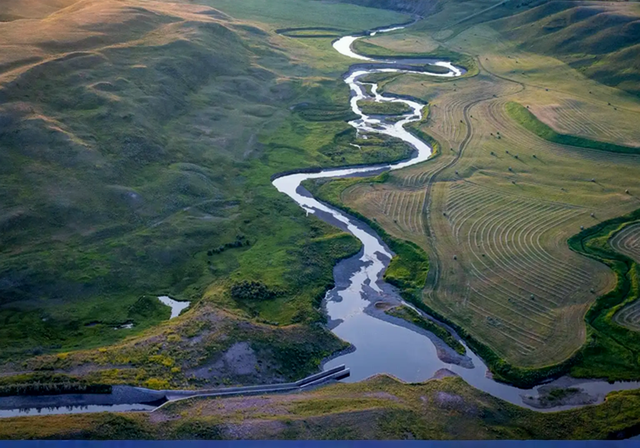
The Milk River Project is beyond remarkable. With over a century of successful operation, this engineering feat diverts water from the St. Mary River on the Blackfeet Reservation, flowing through northern Montana and Glacier National Park, and across southern Alberta, Canada. This project is a testament to the intricate canals, siphons, and diversions designed for a seamless flow of water. The Milk River Project is essential to fulfill Montana’s water demands, catering to eight irrigation districts, Reclamation pump contracts, private contracts, the Blackfeet and Fort Belknap Indian Reservation, and other living communities along the Milk River. The project has created numerous recreational opportunities for the surrounding inhabitants, contributing to the ecosystem’s prosperity and wildlife habitats. With such a prominent and successful project, the Milk River Project has proven to be a symbol of limitless possibilities.
Benefits to Montana’s Economy
How the Milk River Project has been providing to Northern Montana for over 100 years.
🦌 Hunting season in the Milk River Valley… where the bucks are handsome and the mud doesn’t care if you have four-wheel drive! 😂
With the recent moisture, please tread lightly. Those fields might look like a shortcut to your trophy buck, but ruts aren’t the kind of tracks we want left behind! If it’s soft and muddy, keep your tires out. 🌧️🚜
A little gate etiquette goes a long way: 🚪 Found it OPEN? Leave it OPEN. 🔒 Found it CLOSED? CLOSE it behind you. There’s usually a reason—and nobody wants to spend their afternoon chasing cows instead of bucks! 🐄🤣
🛑 Please pay attention to and respect NO HUNTING and NO TRESPASSING signs. That big buck on the other side doesn’t get to grant you permission! Always ask the landowner before entering private property.
Pack out what you pack in, and remember that hardworking people make their living here.
This beautiful Milk River Valley is a gift. Let’s protect the land, respect the people who care for it, and keep it beautiful for everyone who comes after us. 💛
Good luck, hunt safely, and may your stories be big and your ruts nonexistent! 🦌 ...
Our annual Bull Trout Salvage efforts in the St. Mary Canal and Swiftcurrent Creek wrapped up for 2026, and we have some good news to share!
This year, the crews had to salvage ZERO bull trout from the St. Mary Canal and just THREE from Swiftcurrent Creek!
The team joked about going out with a bang since this was the final year of canal salvage, because the new Diversion Dam will be installed. But it turned out to be quite the opposite. And when it comes to protecting bull trout, that's a good thing!
Throughout the summer, PIT tag readers detected approximately four bull trout in the canal. These results are encouraging and suggest that gradually ramping down water flows in both the canal and Swiftcurrent Creek may be helping reduce fish entrainment, which happens when fish are unintentionally carried into the canal system.
Did you know? 🐟
Bull trout monitoring involves more than the annual salvage efforts. The team has Passive Integrated Transponder (PIT) tag monitoring stations throughout the St. Mary system to help track fish movement. These stations are located along the St. Mary River above and below the Diversion Dam, Kennedy Creek, Divide Creek, Boulder Creek, and Swiftcurrent Creek.
This effort is a team approach involving the Blackfeet Tribe, U.S. Fish and Wildlife Service (FWS), and Bureau of Reclamation staff from the Montana Area Office (MTAO) and Denver Technical Service Center (TSC). Their collaboration helps balance water operations with the protection of our natural resources.
📸 Here are a few pictures from this year's salvage efforts. A big thank you to all the agencies and crews involved in the fieldwork, monitoring, and continued protection of bull trout in the St. Mary system! ...
Remember that high water event at the end of June? The one where we made a little history at Sherburne Reservoir outside of Babb, MT, releasing over 2,000 cfs and seeing water flow through the Sherburne Spillway for the first time in many of our careers!
Well, with that much water comes a little cleanup! The high flows caused some erosion along the right bank and in the stilling basin, so Reclamation crews from St. Mary’s and the Marias–Milk River Division have been busy making repairs.
The photos show some of the dirt work and riprap grouting on the face being completed as part of the ongoing Operations and Maintenance at Sherburne. The concrete grouting helps protect against erosion caused by high flows, wind, and wave action.
A little behind-the-scenes look at the work it takes to keep our water infrastructure in good shape. Great work by the Reclamation crews getting it done! 👏 ...
Malta Irrigation District is hiring a General Manager!
After years of dedicated service, our current manager is preparing for retirement. While we are very sad to see him go, we are excited to find the right person to step into this role!
We are hoping to bring someone on board while he is still with us to allow for a smooth transition, some hands-on training, and the opportunity to learn the ins and outs of the District.
Salary: $60,000–$120,000 DOE, plus benefits!
📍 Malta, Montana, or surrounding community
📅 Application Deadline: November 13, 2026
For full job description and employment advertisement, click the link below:
It may be a little brisk up at the St. Mary Diversion Dam, but the chilly temperatures aren’t slowing down progress!
The NW Construction crew is hard at work today installing the new radial gates, marking another exciting milestone in the Diversion Dam’s reconstruction.
Great to see the continued progress as this important project moves forward! ...






🦌 Hunting season in the Milk River Valley… where the bucks are handsome and the mud doesn’t care if you have four-wheel drive! 😂
With the recent moisture, please tread lightly. Those fields might look like a shortcut to your trophy buck, but ruts aren’t the kind of tracks we want left behind! If it’s soft and muddy, keep your tires out. 🌧️🚜
A little gate etiquette goes a long way:
🚪 Found it OPEN? Leave it OPEN.
🔒 Found it CLOSED? CLOSE it behind you.
There’s usually a reason—and nobody wants to spend their afternoon chasing cows instead of bucks! 🐄🤣
🛑 Please pay attention to and respect NO HUNTING and NO TRESPASSING signs. That big buck on the other side doesn’t get to grant you permission! Always ask the landowner before entering private property.
Pack out what you pack in, and remember that hardworking people make their living here.
This beautiful Milk River Valley is a gift. Let’s protect the land, respect the people who care for it, and keep it beautiful for everyone who comes after us. 💛
Good luck, hunt safely, and may your stories be big and your ruts nonexistent! 🦌 ...
1 CommentsComment on Facebook
💨 It’s a little breezy out at Fresno Reservoir… if you see our dam engineer Kody flying by, please return him. 😂
The reservoir levels are looking great! Our tumbleweed inventory is also at an all-time high.
If anyone is missing a few thousand tumbleweeds, please come collect them. No proof of ownership required. 🌾🤣
Might have to get Kody one of those little torch toys… pretty sure he’d volunteer for tumbleweed duty a lot faster! 🔥😂
🎥 Video credit: Kyle Peterson ...
11 CommentsComment on Facebook
🐟 Sometimes a boring year is a GOOD year! 🐟
Our annual Bull Trout Salvage efforts in the St. Mary Canal and Swiftcurrent Creek wrapped up for 2026, and we have some good news to share!
This year, the crews had to salvage ZERO bull trout from the St. Mary Canal and just THREE from Swiftcurrent Creek!
The team joked about going out with a bang since this was the final year of canal salvage, because the new Diversion Dam will be installed. But it turned out to be quite the opposite. And when it comes to protecting bull trout, that's a good thing!
Throughout the summer, PIT tag readers detected approximately four bull trout in the canal. These results are encouraging and suggest that gradually ramping down water flows in both the canal and Swiftcurrent Creek may be helping reduce fish entrainment, which happens when fish are unintentionally carried into the canal system.
Did you know? 🐟
Bull trout monitoring involves more than the annual salvage efforts. The team has Passive Integrated Transponder (PIT) tag monitoring stations throughout the St. Mary system to help track fish movement. These stations are located along the St. Mary River above and below the Diversion Dam, Kennedy Creek, Divide Creek, Boulder Creek, and Swiftcurrent Creek.
This effort is a team approach involving the Blackfeet Tribe, U.S. Fish and Wildlife Service (FWS), and Bureau of Reclamation staff from the Montana Area Office (MTAO) and Denver Technical Service Center (TSC). Their collaboration helps balance water operations with the protection of our natural resources.
📸 Here are a few pictures from this year's salvage efforts. A big thank you to all the agencies and crews involved in the fieldwork, monitoring, and continued protection of bull trout in the St. Mary system! ...
7 CommentsComment on Facebook
Remember that high water event at the end of June? The one where we made a little history at Sherburne Reservoir outside of Babb, MT, releasing over 2,000 cfs and seeing water flow through the Sherburne Spillway for the first time in many of our careers!
Well, with that much water comes a little cleanup! The high flows caused some erosion along the right bank and in the stilling basin, so Reclamation crews from St. Mary’s and the Marias–Milk River Division have been busy making repairs.
The photos show some of the dirt work and riprap grouting on the face being completed as part of the ongoing Operations and Maintenance at Sherburne. The concrete grouting helps protect against erosion caused by high flows, wind, and wave action.
A little behind-the-scenes look at the work it takes to keep our water infrastructure in good shape. Great work by the Reclamation crews getting it done! 👏 ...
7 CommentsComment on Facebook
📣 COURTESY ANNOUNCEMENT 📣
Looking for a little career change?
Malta Irrigation District is hiring a General Manager!
After years of dedicated service, our current manager is preparing for retirement. While we are very sad to see him go, we are excited to find the right person to step into this role!
We are hoping to bring someone on board while he is still with us to allow for a smooth transition, some hands-on training, and the opportunity to learn the ins and outs of the District.
Salary: $60,000–$120,000 DOE, plus benefits!
📍 Malta, Montana, or surrounding community
📅 Application Deadline: November 13, 2026
For full job description and employment advertisement, click the link below:
milkriverproject.com/wp-content/uploads/2026/10/Malta-Irrigation-District-General-Manager-Job-Des...
Please feel free to share with anyone who might be a great fit! ...
0 CommentsComment on Facebook
It may be a little brisk up at the St. Mary Diversion Dam, but the chilly temperatures aren’t slowing down progress!
The NW Construction crew is hard at work today installing the new radial gates, marking another exciting milestone in the Diversion Dam’s reconstruction.
Great to see the continued progress as this important project moves forward! ...
4 CommentsComment on Facebook